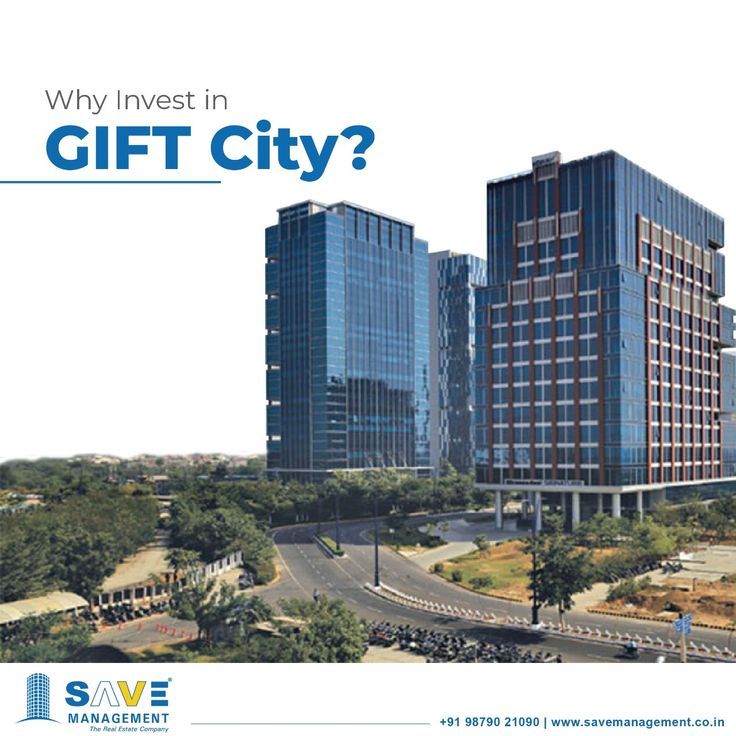
India built an offshore financial centre on its own soil. Here's what that means for your portfolio
If you've tried investing in an international mutual fund recently, you've likely hit a wall. Dozens of India-domiciled schemes that invest overseas have stopped accepting fresh investments. The reason: SEBI and RBI cap the mutual fund industry's total overseas exposure at $7 billion, and that limit has been breached since January 2022. For ETFs investing overseas, the separate $1 billion cap was exhausted by April 2024.
The result is a frustrating paradox. Indian investors are more interested in global diversification than ever, but one of the most popular routes to achieve it is effectively shut.
GIFT City changes that equation entirely.
What Is GIFT City, and Why Should You Care?
Gujarat International Finance Tec-City (GIFT City) is India's first and only International Financial Services Centre (IFSC). Located in Gandhinagar, Gujarat, it operates as a Special Economic Zone with a dedicated financial regulator: the International Financial Services Centres Authority (IFSCA).
Here's the critical detail that most explanations bury in legal jargon: under the Foreign Exchange Management Act (FEMA), GIFT City is treated as foreign territory for financial purposes. This means transactions within GIFT City can be conducted in foreign currencies (USD, EUR, GBP) without mandatory rupee conversion. It also means that financial products and entities based in GIFT City are regulated by IFSCA, not by SEBI or RBI.
Why does this distinction matter for you as an investor?
Because the $7 billion industry cap on overseas investments applies to SEBI-regulated mutual funds. GIFT City funds, regulated by IFSCA, are not subject to that cap. When SEBI says "no more fresh investments in international schemes," GIFT City funds can continue operating without interruption.
Think of it this way. India looked at the success of Singapore, Dubai, and Hong Kong as offshore financial hubs and decided to build one of its own. The result is a regulated, government-backed ecosystem where Indian investors, NRIs, and foreign institutions can access global financial products without the constraints of domestic regulation.
What's Available Through GIFT City Today
As of February 2026, GIFT City hosts over 300 registered fund management entities with combined committed capital exceeding $22 billion. The ecosystem has grown rapidly, particularly since the IFSCA Fund Management Regulations were updated in 2025. Here's what Indian investors can access.
Global Mutual Funds
Multiple Indian AMCs have established GIFT City operations and launched outbound fund schemes. DSP, Edelweiss, Mirae Asset, PPFAS (Parag Parikh), and Tata Asset Management all have fund management entities registered with IFSCA. These funds can invest in global equities, bonds, and other international assets without being constrained by SEBI's overseas investment limits.
PPFAS, for instance, launched S&P 500 index fund-of-funds through GIFT City, something it could not do through its SEBI-regulated arm due to the cap. For investors who want passive exposure to the US market through a familiar Indian brand, this is a direct solution to the SEBI cap problem.
An important distinction: most GIFT City funds are denominated in US dollars. You invest in dollars, returns compound in dollars, and you redeem in dollars. This means your returns are not eroded by rupee conversion at the fund level, though you will eventually convert when bringing funds back to India.
Broker-Dealer Services
IFSCA-registered broker-dealers operate within GIFT City, providing Indian investors with direct access to global equity markets. Unlike SEBI-regulated Indian brokerages (which offer limited international access), GIFT City broker-dealers can offer trading across multiple global exchanges covering US, European, UK, Asian, and other markets.
Valura operates as an IFSCA-registered broker-dealer in GIFT City, offering access to global equities, ETFs, bonds, mutual funds, structured products, REITs, and pre-IPO opportunities through a single platform. Because Valura holds its own broker-dealer licence (rather than routing through a third-party US or global broker), your investments are held under an IFSCA-regulated structure with clear custodial protections.
Portfolio Management Services (PMS)
The minimum investment threshold for PMS in GIFT City was reduced from $150,000 to $75,000 under the 2025 regulations. PMS offerings allow Indian investors to access professionally managed, customised global portfolios, a product category that barely existed for Indian retail investors five years ago.
Alternative Investment Funds (AIFs)
For investors with larger allocations, GIFT City hosts Category I, II, and III AIFs with global mandates. The minimum corpus requirement was reduced from $5 million to $3 million in 2025, and individual investor minimums dropped to $75,000 for accredited investors. These funds invest across private equity, venture capital, hedge strategies, and structured credit internationally.
NSE IFSC and BSE IFSC (Exchange-Traded Products)
NSE's international exchange at GIFT City lists receipts tied to approximately 50 US stocks (including Apple, Tesla, Amazon, Nvidia) that trade during extended hours in USD. While the universe is still limited compared to direct market access, it provides a regulated, exchange-traded route to US equity exposure for Indian investors.
The April 2026 Game-Changer: Fund Relocation
One development deserves particular attention.
Starting April 1, 2026, mutual funds and ETFs domiciled in offshore jurisdictions like Singapore, Mauritius, and Luxembourg can relocate to GIFT City without triggering capital gains tax. This tax-neutral relocation regime, announced in Union Budget 2025, is designed to bring offshore fund structures "onshore" to India's own IFSC.
What does this mean in practice? Fund managers who previously set up structures in Singapore or Mauritius (often to serve Indian and NRI investors with tax efficiency) now have a strong incentive to move those structures to GIFT City. The tax treatment is comparable, the regulatory environment is familiar, and the operational costs are lower.
For Indian investors, the downstream effect is more product variety. As funds relocate to GIFT City, the range of global equity, bond, thematic, and multi-asset funds available through IFSCA-regulated vehicles will expand significantly. Industry observers expect AUM in GIFT City to cross $100 billion within the next few years, driven partly by these relocations.
If you've been waiting for GIFT City's product ecosystem to mature before investing, April 2026 is a meaningful inflection point.
GIFT City vs. LRS Direct: Which Route Is Right for You?
Both routes allow Indian investors to access global markets, but they work differently.
LRS Direct (through a global broker): You remit funds from your Indian bank account to a foreign brokerage account. You buy and sell securities directly on global exchanges. You have full control over individual stock selection, ETF choices, and portfolio construction. This route is ideal for investors who want granular control and access to the widest possible universe of global securities.
GIFT City (through IFSCA-regulated funds or broker-dealers): You invest through entities based in India's IFSC. If using a GIFT City mutual fund, you get professional management with global mandates. If using a GIFT City broker-dealer like Valura, you get the same direct market access as LRS but within an IFSCA-regulated framework and local custodian such as HDFC, ICICI bank.
The practical differences:
Regulatory comfort. Some investors prefer the additional assurance of investing through an entity supervised by an Indian regulator (IFSCA), rather than relying solely on foreign regulatory protections.
Product access. GIFT City funds offer managed products (mutual funds, PMS, AIFs) that aren't available through LRS direct. If you want a professionally managed global portfolio without picking individual stocks, GIFT City fills that gap.
Tax treatment. For resident Indians, capital gains from both routes are taxed similarly. Both involve LRS remittance and TCS on amounts above ₹10 lakh. The nuances around fund-level taxation (particularly for GIFT City AIFs) can create marginal differences that a tax advisor can help evaluate.
The best approach for many investors is both. Use a GIFT City broker-dealer for direct equity and ETF access, and consider GIFT City mutual funds for managed exposure to asset classes or strategies where you don't want to pick individual holdings.
How GIFT City Compares to Offshore Hubs
Indian investors with global exposure have historically used platforms routing through US brokers (DriveWealth, Alpaca Securities, Interactive Brokers). Here's how GIFT City stacks up.
Versus Singapore/Mauritius fund structures: GIFT City offers comparable tax efficiency with the April 2026 relocation regime, lower operational costs, and the advantage of being supervised by an Indian authority. For fund managers, the 10-year income tax holiday (extended to 2030) and reduced MAT (9% vs. 15% elsewhere) make the cost equation compelling.
Versus US-based brokerage accounts: US estate tax is a meaningful risk for Indian investors holding over $60,000 in US-situs assets (up to 40% on death). GIFT City broker-dealers can mitigate this through structuring. Additionally, regulatory complaints and account issues with a US broker require navigating US legal processes. With an IFSCA-regulated entity, recourse is through Indian regulatory channels.
Versus Dubai/DIFC: Dubai's financial centre offers zero personal tax, but it's designed primarily for residents and regional investors. GIFT City is purpose-built for Indian investors and integrates directly with India's LRS and FEMA frameworks.
Tax Implications for Resident Indians Investing Through GIFT City
This is where confusion runs highest, so let's be precise.
LRS and TCS apply. Investing through GIFT City still involves remitting funds abroad under LRS (since GIFT City is treated as foreign territory under FEMA). TCS of 20% applies on remittances above ₹10 lakh per financial year for investment purposes, same as any other LRS remittance. This TCS is adjustable against your income tax liability.
Capital gains are taxed normally. For resident Indians, capital gains from GIFT City investments (whether through funds or direct equity) are taxed under standard Indian tax provisions. Short-term gains (holding period under 24 months) are taxed at your slab rate. Long-term gains are taxed at 12.5%. This is the same treatment as LRS-direct investments.
Dividends and interest are taxed at slab rates. Income from GIFT City investments is added to your total income and taxed accordingly. Foreign tax credits may apply where DTAAs are relevant.
Schedule FA disclosure is mandatory. All GIFT City investments must be reported as foreign assets in your income tax return, just as you would report any other overseas holding.
Key clarification: The "tax-free" claims you may read about GIFT City primarily apply to non-resident investors (NRIs in zero-tax jurisdictions like the UAE) who benefit from Section 10(4D) exemptions. For resident Indians, the tax treatment is standard. The advantage of GIFT City is product access and regulatory framework, not a special tax concession.
How to Start Investing Through GIFT City
Step 1: Choose your investment vehicle. Decide whether you want a GIFT City mutual fund (managed exposure), a broker-dealer account (direct market access), or both.
Step 2: Open an account. For a GIFT City broker-dealer like Valura, the KYC process requires PAN, Aadhaar, bank details, and standard declarations. Most processes are fully digital.
Step 3: Fund your account via LRS. Instruct your bank to remit USD (or other foreign currency) to your GIFT City account. Your bank will handle TCS collection on amounts above ₹10 lakh. Purpose code for equity investment is typically S0001.
Step 4: Invest. With a broker-dealer, you can buy global equities, ETFs, bonds, and other instruments directly. With a GIFT City fund, your investment is deployed by the fund manager per the scheme mandate.
Step 5: Report. Disclose your GIFT City holdings in Schedule FA when filing your ITR. Report income (dividends, capital gains) and claim foreign tax credits through Form 67 where applicable.
Frequently Asked Questions
Is GIFT City only for wealthy or institutional investors? Not anymore. While AIFs still require minimum investments of $75,000, retail mutual funds in GIFT City have launched with minimums as low as $500. Broker-dealer accounts have no mandated minimum in most cases. The ecosystem is increasingly accessible to individual investors.
Are GIFT City investments safe? GIFT City is regulated by IFSCA, a statutory authority established by the Government of India. Fund management entities, broker-dealers, and banking units within GIFT City must meet capitalisation and compliance norms comparable to global financial hubs. Investments are held in segregated custodial accounts, separate from the platform's own assets.
Can I transfer my existing overseas investments into a GIFT City account? In some cases, yes. ACATS (Automated Customer Account Transfer Service) and similar mechanisms may allow transfer of holdings from foreign brokerages into GIFT City broker-dealer accounts. The specifics depend on the transferring broker and the receiving entity. Speak with your GIFT City platform for guidance.
Will the SEBI overseas MF cap ever be raised? Unclear. Despite repeated industry requests, neither SEBI nor RBI has increased the $7 billion cap since it was set in 2021. The RBI's concern around rupee depreciation and forex reserve management appears to be the primary barrier. GIFT City, being outside SEBI's cap regime, provides a structural alternative rather than waiting for policy change.
How is GIFT City different from investing through INDmoney or Vested? INDmoney and Vested are SEBI-registered platforms that route orders through US partner brokers (DriveWealth, Alpaca, VF Securities). They offer access primarily to US stocks and ETFs. GIFT City broker-dealers like Valura are IFSCA-registered entities that can offer access to US, UK, European, Asian, and other global markets, along with mutual funds, bonds, structured products, and more, under a single regulatory umbrella.
Do I need a separate bank account for GIFT City investments? You don't need a separate bank account, but you do need a bank that processes LRS remittances. Most major Indian banks (SBI, HDFC, ICICI, Axis, Kotak) handle LRS transactions. Some GIFT City platforms also offer integrated remittance processing that simplifies the fund transfer.
What happens if IFSCA changes its regulations? Regulatory evolution is a feature of any financial ecosystem, not a bug. IFSCA has consistently moved toward making GIFT City more accessible (reducing minimums, easing KMP norms, introducing retail fund structures). The tax holiday extension to 2030 provides five years of policy certainty. As with any investment decision, regulation can change, but the trajectory has been toward liberalisation, not restriction.
Can I invest a small amount to test the waters? Yes. With retail mutual funds in GIFT City accepting $500 minimums and broker-dealer accounts having no mandated floor in most cases, you can start small. A reasonable approach is to allocate a modest initial amount, familiarise yourself with the LRS remittance process and the platform, and scale up as you grow comfortable.
I already invest in US stocks through Vested/INDmoney. Is GIFT City relevant for me? If your current platform serves your needs and you're satisfied with US-only exposure, there's no urgency to switch. GIFT City becomes compelling in three scenarios: you want access to markets beyond the US (Europe, UK, Japan, Singapore), you want managed products (global mutual funds, PMS), or you prefer investing through an entity regulated by an Indian authority (IFSCA) rather than relying on a foreign brokerage relationship.
What is the future outlook for GIFT City? The government has signalled strong commitment. The tax holiday runs until 2030. The April 2026 MF/ETF relocation regime is expected to bring substantial AUM onshore. Major Indian AMCs (DSP, Mirae, Edelweiss, PPFAS, Tata, and others) are expanding their GIFT City operations. Employment at GIFT City is projected to grow from roughly 25,000 to over 100,000 in the coming years. The ecosystem is maturing rapidly, and the range of products and platforms available to Indian investors will continue to expand.
Get started with Valura.ai →
Valura ai is UAE largest investment platform that is now in India. Valura is an IFSCA-registered broker-dealer in GIFT City, offering Indian investors access to global equities, ETFs, mutual funds, bonds, structured products, REITs, and pre-IPO opportunities across multiple international markets.
UAE residents pay zero capital gains tax, zero income tax, and zero inheritance tax on investments. Here is exactly what that means in hard numbers and why most expats are not using this advantage properly.
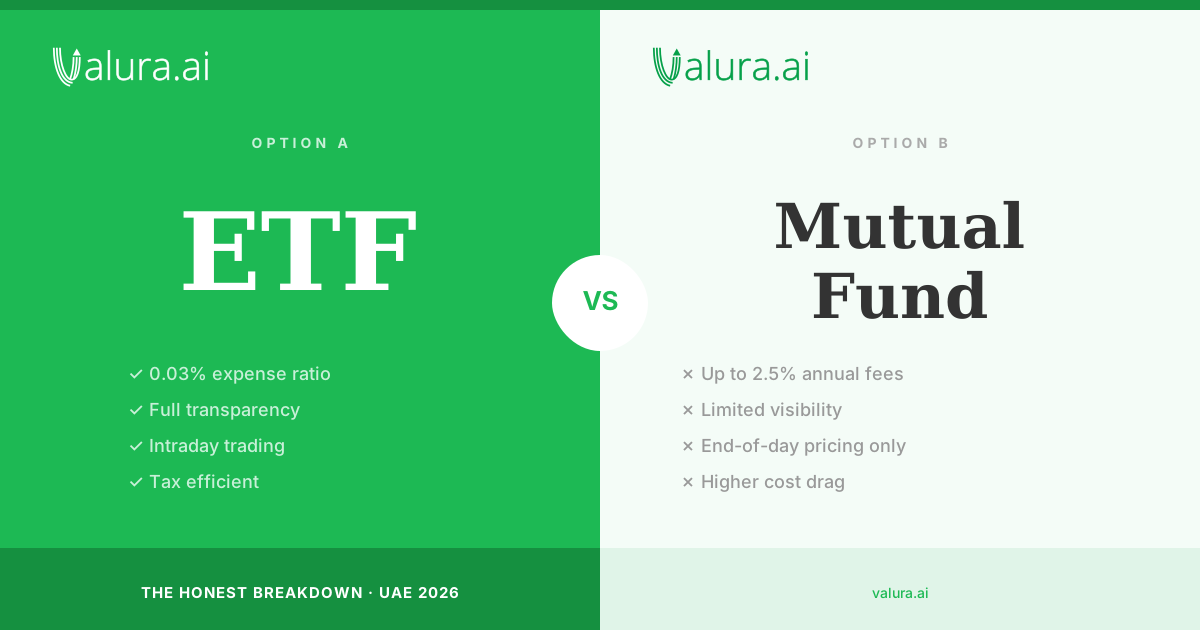
ETFs and mutual funds both give you diversified exposure, but they are fundamentally different products. Here is the honest breakdown for UAE investors, including which to choose and why.

How to Invest in the S&P 500 from UAE (2025) | Platforms, Tax & Strategy | Valura
The Complete Guide to ETF Investing in UAE (2026) | Valura

The complete playbook for Indian investors: routes, platforms, taxes, costs, and why US stocks are just the beginning.
Your portfolio should be as ambitious as you are. Here's why and how to invest beyond India's borders.

Everything Indian investors need to know about investing globally: routes, regulations, taxes, platforms, and how to actually get started.

Every global investment starts here understand limits, TCS, and timing before you move your money