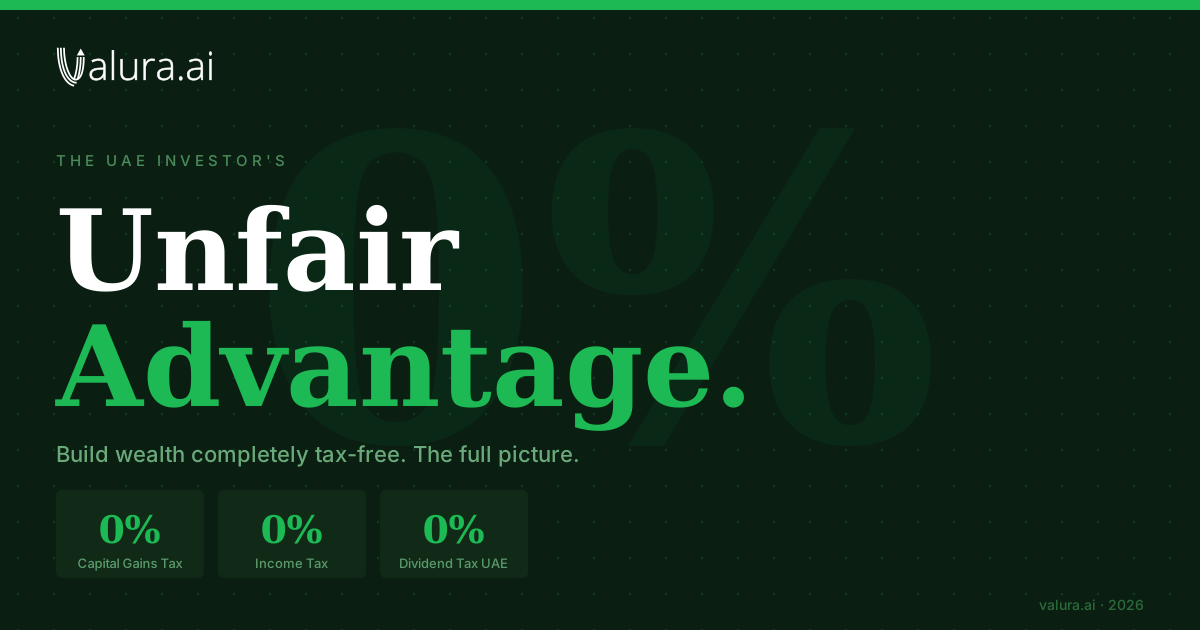
UAE residents pay zero capital gains tax, zero income tax, and zero inheritance tax on investments. Here is exactly what that means in hard numbers and why most expats are not using this advantage properly.
There is a reason high-earning professionals from the UK, Germany, France, Australia, and Canada move to Dubai and describe it as a financial reset.
It is not just the salary. It is what happens to every dirham of that salary after you earn it.
In the UAE, the answer is simple: you keep it. All of it. No income tax, no national insurance equivalent, no capital gains tax, no inheritance tax. When you invest and your portfolio grows, the growth belongs to you. When you sell, the proceeds are yours. When you die and leave assets to your family, no government takes a percentage.
This is not a loophole. It is not aggressive tax planning. It is the legal, structural reality of living and investing in the United Arab Emirates.
The question is not whether this advantage exists. The question is whether you are using it properly. Most UAE residents are not.
The Three Taxes You Are Not Paying
1. Capital Gains Tax: Zero
Capital gains tax is the tax levied on the profit you make when you sell an investment for more than you paid for it.
In the UAE: zero.
No CGT on stocks. No CGT on ETFs. No CGT on bonds. No CGT on cryptocurrency. No CGT on gold. No CGT on foreign property (subject to the laws of the country where the property is located). No CGT on business equity sales.
For perspective:
UK: CGT at 18% (basic rate) or 24% (higher rate) on residential property gains; 10% or 20% on other assets. Annual exempt amount reduced to £3,000 from 2024.
Germany: 25% flat Abgeltungsteuer on capital gains plus 5.5% solidarity surcharge = ~26.4% effective rate.
Australia: Capital gains taxed as ordinary income, with a 50% discount for assets held over 12 months. Effective CGT rates of 23.5–47% depending on income bracket.
Canada: 50% of capital gains included in taxable income, taxed at marginal rates. Effective rates typically 15–27%.
UAE: 0%.
2. Income Tax: Zero
Your salary, freelance income, dividends (UAE side), rental income from UAE property, and business profits are not subject to UAE personal income tax.
Note: UAE corporate tax (9% on profits above AED 375,000) was introduced in 2023 for businesses — but this does not apply to individuals' personal investment income or salaries.
The income tax comparison with the UK is stark. A UAE-based professional earning the equivalent of £120,000 per year:
UK taxpayer: Pays approximately £43,000 per year in income tax and national insurance.
UAE resident: Pays £0.
Over a 10-year career, the UK taxpayer pays approximately £430,000 in income and payroll taxes that the UAE resident keeps and can invest.
3. Inheritance Tax: Zero (With Important Caveats)
The UAE does not levy inheritance tax or estate duty on assets located in the UAE. For UAE-based assets, there is no government claim on your estate when you pass.
However, important caveats apply:
Your home country may still have inheritance tax claims on your worldwide estate if you are domiciled there. UK domicile rules, in particular, are complex and do not simply disappear because you live abroad.
Succession of assets in the UAE may be governed by Sharia law for Muslims, or by your home country's laws for non-Muslims, depending on how assets are registered and whether a valid UAE Will is in place.
UAE property specifically benefits from the Dubai International Financial Centre (DIFC) Wills Service, which allows non-Muslims to register English-law Wills governing UAE-based assets.
The inheritance tax zero-rate is a real advantage but requires proper estate planning to access fully. This is a separate discipline from investment management.
What This Means in Hard Numbers
Abstract tax rates are difficult to internalise. Concrete numbers are not.
Scenario 1: The 10-Year ETF Investor
Two investors both invest $200,000 into a diversified ETF portfolio (75% equity, 25% bonds) in January 2025. Both achieve an 8% annualised return. Both sell their entire portfolio in January 2035.
Portfolio value in January 2035: ~$432,000
Total gain: ~$232,000
UAE investor: Pays zero CGT. Walks away with $432,000.
UK higher-rate taxpayer: Pays 20% CGT on $232,000 = $46,400 in tax. Walks away with ~$385,600.
German investor: Pays ~26.4% on $232,000 = $61,200 in tax. Walks away with ~$370,800.
Australian investor (top marginal rate, 50% CGT discount): Pays ~23.5% on $232,000 = $54,500 in tax. Walks away with ~$377,500.
The UAE investor keeps between $46,400 and $61,200 more than comparable investors in peer economies on a single $200,000 investment over 10 years. That differential is larger than the original annual salary of many early-career professionals.
Scenario 2: The Monthly Investor Over 15 Years
A UAE-based professional invests $2,000 per month into a diversified ETF portfolio for 15 years. Average return: 9% per year.
Portfolio value after 15 years: approximately $744,000
Total contributions: $360,000
Total gain: ~$384,000
UAE investor sells entire portfolio: Tax bill = $0. Net proceeds: $744,000.
UK higher-rate investor sells: CGT at 20% on $384,000 = $76,800. Net proceeds: ~$667,200.
The UAE investor takes home $76,800 more on 15 years of disciplined monthly investing. That is more than 21% of total contributions money that the UAE resident keeps and the UK resident sends to the Treasury.
Scenario 3: The Dividend Compounder
A UAE investor builds a $500,000 dividend ETF portfolio (SCHD/VYM blend) yielding 3.5% per year, dividends reinvested for 10 years. US withholding of 15% applies to dividends. UAE tax: zero.
Net annual dividends (year 1): ~$14,875 (after 15% withholding)
Net annual dividends (year 10): ~$25,000+ (compounding effect)
Total dividends received and reinvested over 10 years: ~$190,000
A UK higher-rate investor doing the same: pays 33.75% dividend tax on distributions above the £500 allowance. Over 10 years, approximately $63,000 in UK dividend tax on the same income stream not counting the CGT on the eventual sale.
The UAE investor's $190,000 in reinvested dividends compounds entirely. The UK investor's effective dividend reinvestment is reduced to approximately $127,000 after tax drag.
The Taxes You Still Pay: Being Accurate
This advantage is real. It is also sometimes overstated. Here is the accurate picture.
US withholding tax on dividends (15% with W-8BEN): Applies to dividends from US-listed securities. Cannot be avoided by UAE residency. It is deducted at source by the broker before the dividend reaches your account. Impacts dividend-focused investors; minimal impact on pure growth investors who reinvest.
VAT (5%): The UAE introduced 5% VAT in 2018 on most goods and services. This applies to your consumption, not your investments.
Corporate tax (9% above AED 375,000 threshold): Applies to businesses, not to individuals' personal investment income. Irrelevant for personal ETF portfolios.
Your home country's potential claims: Some countries (notably the US, which taxes on citizenship not residency) continue to tax citizens on worldwide income regardless of where they live. US citizens in the UAE must continue to file US tax returns and pay US taxes. UK-domiciled individuals may remain subject to UK inheritance tax on worldwide assets regardless of UAE residency. If you hold citizenship or domicile in a country with aggressive extraterritorial tax rules, the UAE advantage applies to the UAE-side friction only your home country's claims require separate professional advice.
The Opportunity Most UAE Residents Are Missing
The numbers above are not theoretical. They represent real money that leaves the table every year for the UAE residents who keep their savings in bank accounts earning 0.5-1.5%, or who invest sporadically rather than systematically, or who delay starting because they are "not ready yet."
The window is finite. Most professionals spend 5-15 years in the UAE. The tax-free compounding advantage works in direct proportion to the amount invested and the time it compounds. Every month of delay is a month of compounding that cannot be recovered.
The optimal strategy for a UAE-based investor is straightforward in principle:
Maintain 3–6 months of expenses as liquid cash (high-yield cash account or T-bill ETF)
Invest 15–25% of monthly net income systematically into a diversified ETF portfolio
Choose the right platform for your portfolio size (robo-advisory for under $25K; managed portfolio service for above)
Do not touch it except to add to it
Review annually
The UAE provides the most favourable tax environment for wealth accumulation available to legal residents of any major global hub. Whether you use it or not is a choice but the cost of not using it is now calculable.
[See how Valura builds tax-efficient ETF portfolios for UAE residents →]
[Download the free UAE ETF Portfolio Builder →]
Frequently Asked Questions
Is there really no capital gains tax in UAE? Correct. The UAE does not levy capital gains tax on individuals. This applies to gains on stocks, ETFs, bonds, cryptocurrency, and most other investment assets. There is no personal income tax either.
Do I still pay tax to my home country if I live in the UAE? It depends on your home country and citizenship. Most countries tax on residency meaning once you are a UAE resident, your investment income earned and received in the UAE is outside their tax net. The US is a major exception — it taxes on citizenship regardless of residency. UK domicile rules can also create ongoing UK tax exposure. If your home country has extraterritorial tax rules, get professional advice specific to your situation.
What is the W-8BEN form and do I need it? The W-8BEN is a US IRS form that confirms your non-US status to your broker. Submitting it reduces US withholding tax on dividends from US-listed ETFs from 30% to 15%. Every UAE-based investor in US-listed securities should have this on file with their broker.
Does the zero CGT apply to property gains? UAE-based property: yes, there is no UAE CGT on gains from selling UAE property. For property held in other countries, the tax rules of that country apply.
Can I bring my UAE-built investment portfolio back to my home country tax-free? The gains you accumulated while UAE-resident are generally not retrospectively taxed when you return home, they were earned in a zero-CGT environment. However, future gains on the same portfolio after you become resident elsewhere will be subject to that country's rules. Planning the timing of any large realisation before relocating is a meaningful consideration.
This article provides general information about UAE tax treatment of investments. It does not constitute tax or legal advice. Tax rules are complex and your individual circumstances, including citizenship, domicile, and home country obligations determine your actual tax position. Consult a qualified tax advisor for guidance specific to your situation.
Related Articles:
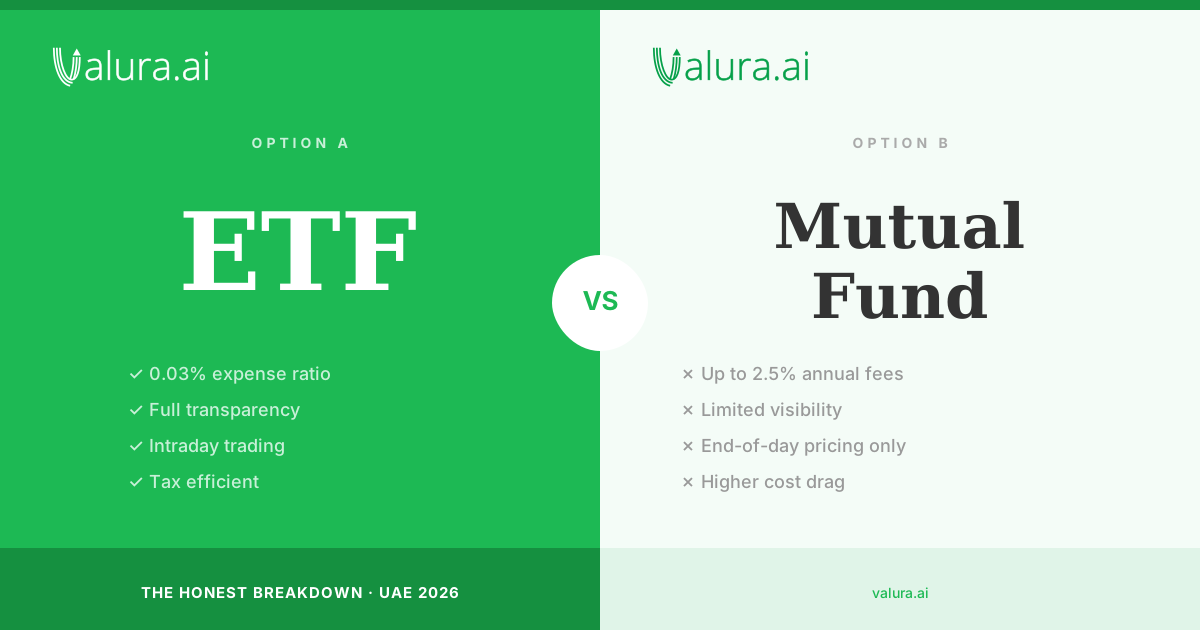
ETFs and mutual funds both give you diversified exposure, but they are fundamentally different products. Here is the honest breakdown for UAE investors, including which to choose and why.
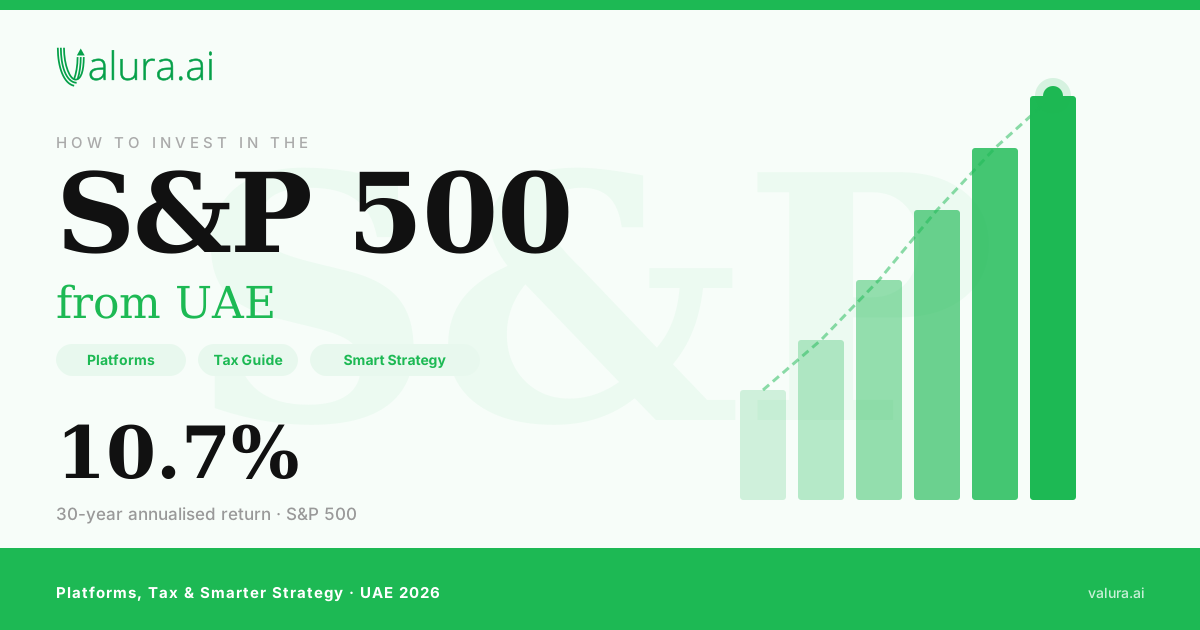
How to Invest in the S&P 500 from UAE (2025) | Platforms, Tax & Strategy | Valura
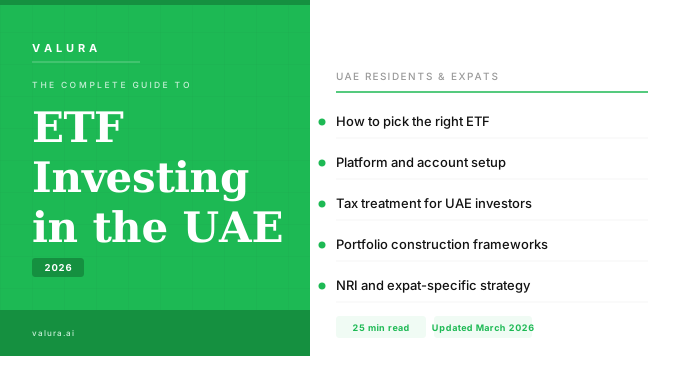
The Complete Guide to ETF Investing in UAE (2026) | Valura

The complete playbook for Indian investors: routes, platforms, taxes, costs, and why US stocks are just the beginning.

Your portfolio should be as ambitious as you are. Here's why and how to invest beyond India's borders.

Everything Indian investors need to know about investing globally: routes, regulations, taxes, platforms, and how to actually get started.

India built an offshore financial centre on its own soil. Here's what that means for your portfolio

Every global investment starts here understand limits, TCS, and timing before you move your money